
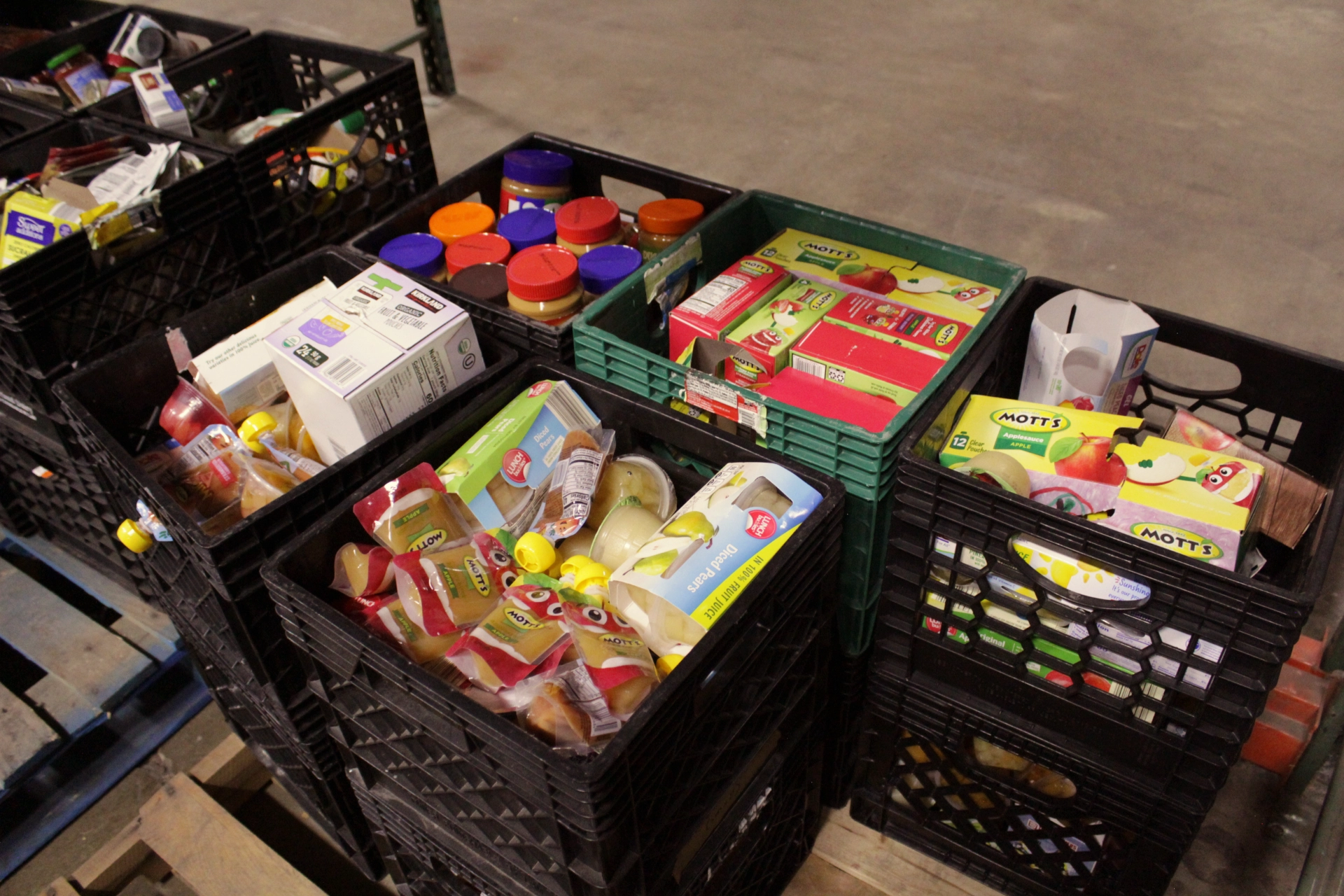
Donate Food
Our services rely on food donations of fresh produce, proteins, and pantry staples from individuals, groups, and businesses.
Food donations can be dropped off at either of our locations:
Warehouse
Schedule
Monday through Friday
8 a.m. to 2 p.m.
Location
9311 Gaither Road
Gaithersburg, MD 20877
Details
An after-hours drop box is located outside the main entrance for shelf-stable (no refrigerated or frozen) items.
Administrative office
Schedule
Monday through Friday
8 a.m. to 4 p.m.
Location
12301 Old Columbia Pike
Suite 200
Silver Spring, MD 20904
Details
During business hours, you can leave shelf-stable (no refrigerated or frozen) items in our pod located in the parking lot.
On this page
Most needed foods
- Grains
- Protein
- Canned tuna, salmon, or chicken (in water)
- Dry or canned beans (low-sodium)
- Natural nut butters
- Fruits and vegetables
- Canned vegetables (low-sodium)
- Canned fruit (in juice)
- Fruit cups
- Other healthy items
- Shelf-stable individual milk boxes
- Cooking oil and spices
Expired foods
Here’s how long we can distribute donated foods past their best by or sell by dates:
| Item | Past best by or sell by date |
|---|---|
| Baking mixes | 8 months |
| Dry beans and nuts | 1 year |
| Cereals and crackers | 1 to 2 years |
| Uncooked pasta and rice | 1 to 2 years |
| Canned high-acid foods (for example, peaches, tomatoes, and juice) | 12 to 18 months |
| Canned low-acid foods (for example, meat and vegetables) | 2 to 3 years |
| Food in glass or plastic jars | 2 to 3 years |
Foods unsuitable for donation
We care greatly about the health of our community and ask that you do not donate soda, cakes, cookies, or candy. We also do not accept the following:
- Alcohol
- Foods canned, picked or preserved at home
- Damaged cans (for example, sharply dented, swollen, bulging, leaking, or rusted)
- Repackaged bulk foods
- Foods in containers without labels
- Foods in opened or torn containers
- Spoiled foods (for example, browning, unusual appearance, unusual odor)
- Foods that have been exposed to fire, flooding, excessive heat, smoke, radiation, or other environmental contamination